
Natural Gas BBQs: 8 Questions Before You Buy
No more empty propane tanks: a natural gas BBQ runs on your home's gas line. Here are clear answers to the 8 questions Canadians ask before buying one, from installation to burners, grates and Weber Genesis models.
8 min read
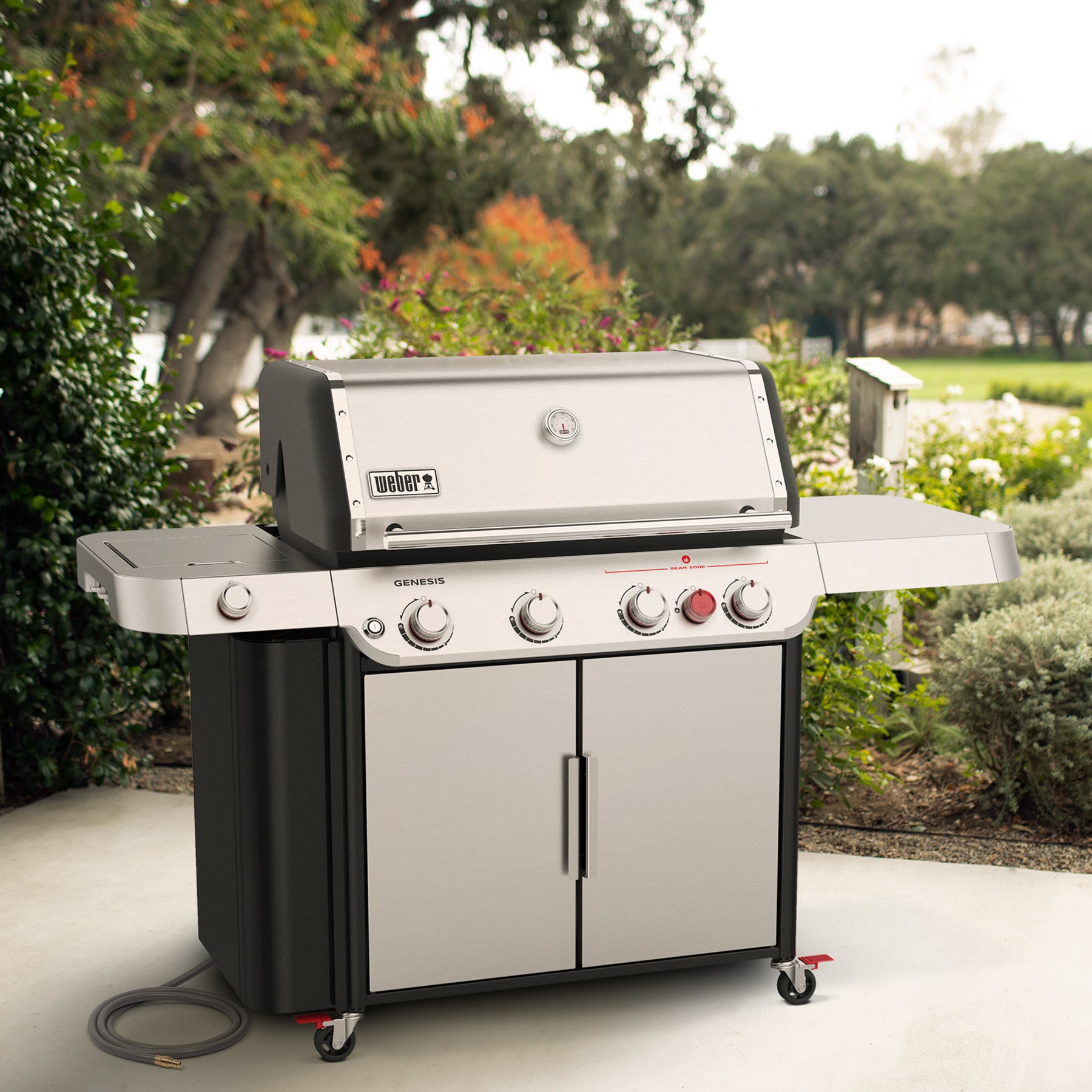
Running out of propane in the middle of a family BBQ, hauling tanks to be refilled, checking the gauge before every cookout: if that sounds familiar, a natural gas BBQ may be exactly what you need. Connected directly to your home's gas line, it's always ready to cook. But before you buy, there are a few important questions to answer: installation, size, grates and which model fits your yard. This guide answers the 8 questions Canadian buyers ask most, with the models from our catalogue that fit each situation.
What Is a Natural Gas BBQ?
A natural gas BBQ is a gas grill designed to run on the natural gas supply of your home instead of a propane tank. It connects to a dedicated gas line through a hose and shut-off valve, so it never runs out of fuel. Natural gas and propane models are different: always buy the version that matches your fuel.
From the outside, a natural gas grill looks just like its propane twin. The difference is inside: the valves and burner orifices are sized for natural gas, and there's no tank to install under the cart. At RichardF-Garden, the Weber Genesis models in our natural gas collection are sold as dedicated natural gas versions, such as the Weber Genesis E-325 Natural Gas, a 3-burner grill with PureBlu burners and an extra-large sear zone.
Is a Natural Gas BBQ Better Than a Propane BBQ?
A natural gas BBQ is better if you grill often and your home already has a natural gas supply: there are no tanks to refill, no risk of running out mid-cook and the fuel supply stays steady all year. A propane BBQ is better if you want to move your grill freely or if your home has no natural gas.
The advantages of natural gas:
- No tank to buy, refill, transport or store.
- An endless supply: you'll never run out halfway through a roast.
- A steady supply in winter, when cold temperatures can make propane tanks less effective.
The limits to know:
- The grill stays near its gas connection: you can't take it to the cottage or the campsite.
- A gas line must be installed by a licensed professional, which is an extra step and cost.
- Your home must already have natural gas service.
If you grill all year round, including in winter, natural gas is the most convenient choice. Read our winter grilling tips to make the most of it.
Who Should Install a Natural Gas BBQ?
A natural gas BBQ must be connected by a licensed gas technician or gas fitter. They install or extend the gas line to your patio, add a shut-off valve and check the connection for leaks. Requirements and permits vary by province and municipality, so ask your installer what applies in your area.
Plan the installation before you buy: decide where the grill will stand, check the clearances to walls, railings and windows listed in the owner's manual, and make sure the gas outlet can be placed nearby. In Canada, book the work in the fall or spring, ideally before the ground freezes if the line runs underground. Never try to connect a natural gas grill yourself.
How Many Burners Does Your Natural Gas BBQ Need?
For most families of four to six people, a 3-burner natural gas BBQ is enough for everyday meals and weekend cookouts. If you often host large groups, cook several dishes at once or want a side burner for sauces and sides, a 4-burner model gives you more space and flexibility.
- 3 burners, everyday family grilling: the Weber Genesis E-315 Natural Gas offers PureBlu burners, porcelain-enameled cast-iron grates, FLAVORIZER Bars, a warming rack and side tables.
- 4 burners, for entertaining: the Weber Genesis E-435 Natural Gas adds an extra-large sear zone, a side burner, an expandable top grate and an extra-large side table.
Think about how you really cook: a bigger grill takes more space on the patio and more time to heat up, so choose the size you'll use most often, not the one you'll use once a year.
What's the Difference Between the Weber Genesis and the Genesis II?
The current Weber Genesis focuses on searing and versatility, with PureBlu burners, an extra-large sear zone on most models and, on 4-burner versions, an expandable top grate. The Genesis II offers a Tuck-Away warming rack, a 10-year warranty on all grill parts and, depending on the model, a Sear Station, a side burner and an enclosed cabinet.
Both families are available in natural gas in our catalogue. Choose the current Genesis if you want the latest design and the biggest sear zone, such as the Weber Genesis S-435 Natural Gas in stainless steel. Choose the Genesis II if the 10-year warranty on all parts matters most to you, such as the Weber Genesis II E-335 Natural Gas, with a Sear Station and a side burner. Genesis II models are also compatible with the iGrill 3 thermometer, sold separately.
Stainless Steel or Cast Iron Grates: Which Is Better?
Porcelain-enameled cast-iron grates hold heat very well and leave deep sear marks, which makes them ideal for steaks and burgers. Stainless steel grates are very durable, resist rust and are easy to clean. Both cook very well: choose cast iron for searing, stainless steel for low maintenance.
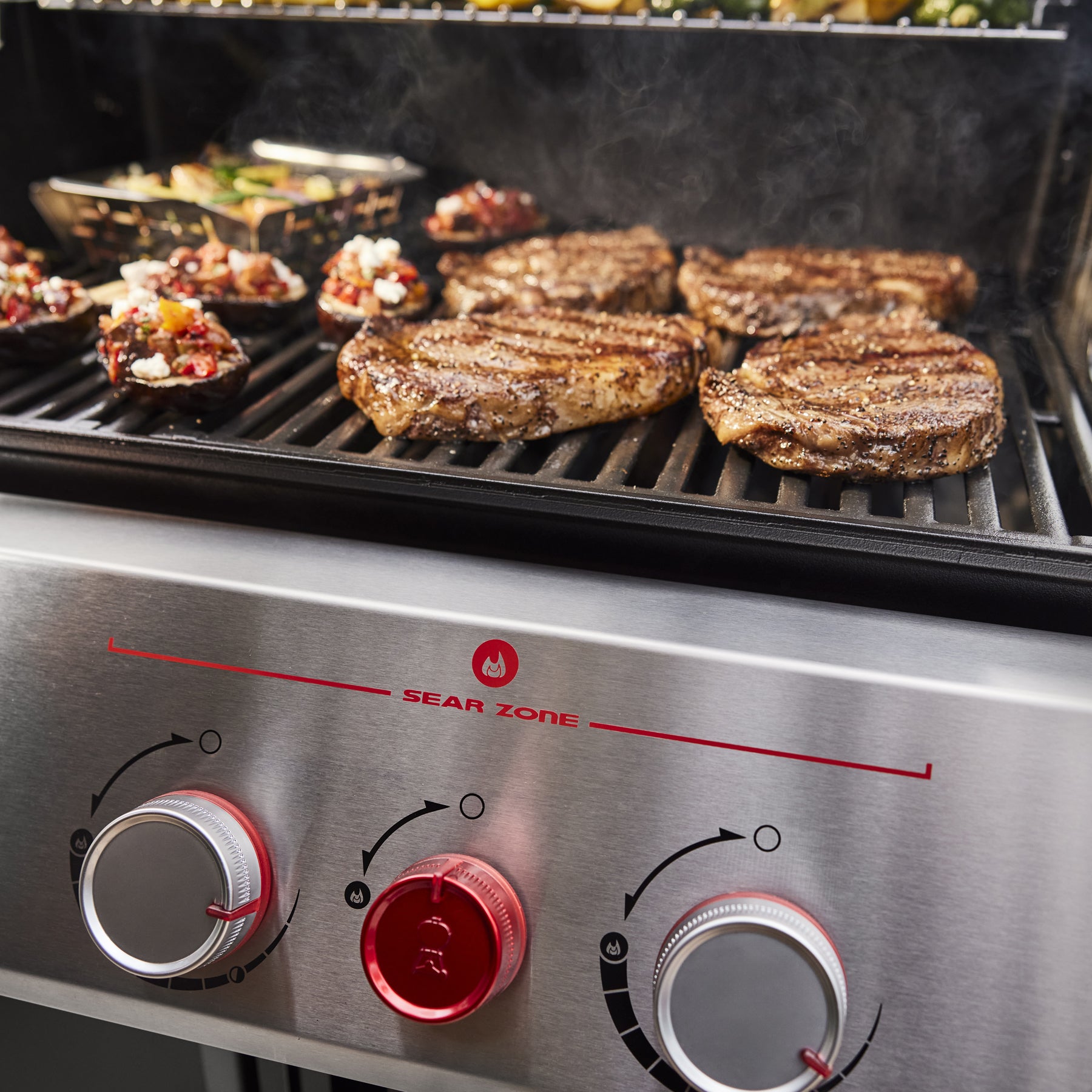
In our catalogue, the Genesis "E" models, like the E-315 and E-325, use porcelain-enameled cast-iron grates. For stainless steel, look at the Weber Genesis S-315 Natural Gas, with stainless steel cooking grates, or the Weber Genesis II S-435 Natural Gas, with 7 mm solid stainless steel rod grates. Whatever you choose, clean the grates after each use while they're still warm.
Where Can I Buy a Natural Gas BBQ Online in Canada?
You can buy a natural gas BBQ online at RichardF-Garden, where our collection includes Weber Genesis and Genesis II natural gas grills with 3 or 4 burners, in black or stainless steel. Before ordering, make sure your home has natural gas service and plan the installation of the gas line with a licensed technician.
A short checklist before you order:
- Fuel: make sure you choose the natural gas version, not the propane one.
- Location: measure the space on your patio and check the clearances in the owner's manual.
- Size: 3 burners for everyday family meals, 4 burners for entertaining.
- Grates and features: cast iron or stainless steel, sear zone, side burner, cabinet.
- Installation: book a licensed gas technician before the grill arrives.
Browse all our natural gas BBQs and compare the models side by side.
When Is the Best Time to Buy a BBQ?
The best time to buy a natural gas BBQ is when you have time to plan the installation: in the fall, before the ground freezes, or early in spring, before the grilling season. Promotions vary from year to year and can't be predicted, so focus on choosing the right model and getting it installed properly.
Buying in the fall has a real advantage with natural gas: once your grill is connected, you can keep grilling all winter without ever worrying about an empty tank. And when spring comes, you're ready from the very first warm weekend, while others are still waiting for their installation.
Frequently Asked Questions
Can I use a natural gas BBQ in winter?
Yes. A natural gas BBQ is one of the best options for winter grilling, because its fuel supply comes from your home's gas line instead of a tank sitting in the cold. Clear the snow around the grill, keep the lid closed as much as possible and allow a little extra preheating time.
Can I convert a propane BBQ to natural gas?
Only if the manufacturer offers an approved conversion kit for your exact model, and the conversion must be done by a licensed gas technician. Never modify the valves or orifices yourself. In most cases, the simplest and safest solution is to buy a grill built for natural gas from the start.
Is natural gas cheaper than propane?
It depends on where you live: energy prices vary by province, by supplier and over time, so there is no single answer. Compare your local natural gas rates with the price of refilling propane tanks, and remember the convenience factor: with natural gas, there are no tanks to transport or exchange.
Where should I place my natural gas BBQ?
Place it outdoors, on a stable surface, away from doors, windows and vents, and respect the clearances to walls and railings listed in your owner's manual. Never use a gas grill in a garage, a shed, a carport or under a covered porch, and keep the area around it free of snow and clutter.
A natural gas BBQ is an investment in convenience: no more empty tanks, no more refills, and a grill that's ready every time you are, in summer and in winter. Choose the size and grates that match the way you cook, plan the installation with a licensed technician, and enjoy your grill for years. Shop our natural gas BBQs today.