Best Snow Blower for Prairie Winters: Wind, Drifts and Cold
Wind-packed drifts, deep cold, chinook ice and the plow ridge: direct answers on choosing a snow blower for Alberta, Saskatchewan and Manitoba, with the right model for each situation.
12 min read
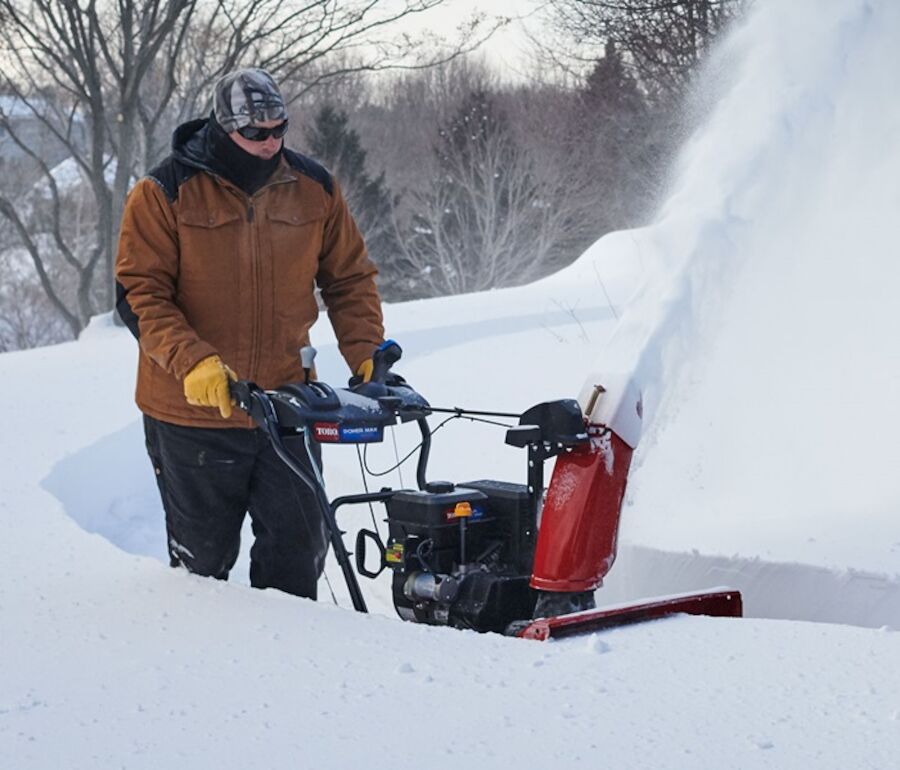
Choosing a snow blower for Prairie winters is not the same as choosing one for a sheltered city street in the East. In Alberta, Saskatchewan and Manitoba, the wind does as much work as the snowfall: it packs snow into hard drifts across your driveway, rebuilds them overnight and turns a quick morning job into a long session in the dark and the cold. This guide answers the questions Prairie homeowners ask before buying, from three-stage machines and heated grips to cold starts, chinook ice and acreage driveways, with the models from our catalogue that fit each situation.
What Makes Prairie Snow So Hard to Clear?
On the Prairies, wind is often the real problem. Strong winds pick up snow and pack it into dense drifts across driveways and walkways, sometimes refilling a cleared path within hours. Environment Canada issues blizzard alerts when blowing snow is expected to cut visibility to 400 metres or less, a sign of how hard the wind works on open land.
Three conditions shape what a Prairie snow blower has to handle:
- Wind-packed drifts. Snow that falls in very cold air is often light at first, but once the wind moves it, it settles into firm, compact drifts. A light machine tends to ride over them instead of biting in.
- Deep cold. Long cold snaps are part of a Prairie winter, and Environment Canada issues Extreme Cold alerts when temperatures or wind chill values become dangerous. The cold affects engines, batteries and, above all, the person doing the clearing.
- Sudden thaws and refreezes. Chinook winds can bring southern Alberta quick warm spells in the middle of winter. When the cold returns, meltwater freezes on driveways and sidewalks, and Environment Canada has a specific Flash Freeze alert for this kind of rapid temperature drop.
Add the hard ridge the city plow leaves at the end of the driveway, and you can see why Prairie buyers usually need more machine than the snowfall totals alone suggest. Source: Environment and Climate Change Canada, Severe winter weather alerts.
Single-Stage, Two-Stage or Three-Stage: Which Is Best for Prairie Drifts?
For most Prairie driveways, a two-stage snow blower is the sensible starting point. Its auger breaks up packed snow and an impeller throws it clear. A three-stage machine adds an accelerator that feeds snow to the impeller faster, which helps with hard drifts and plow ridges. Single-stage models are best kept for short, sheltered walkways and light snowfalls.
A single-stage machine uses one fast-spinning auger that scoops and throws the snow in the same motion. It is light and easy to handle, but its intake is low, so wind-packed drifts and plow ridges quickly reach its limits. For a full comparison of each type, see our guide to the best snow blower in Canada.
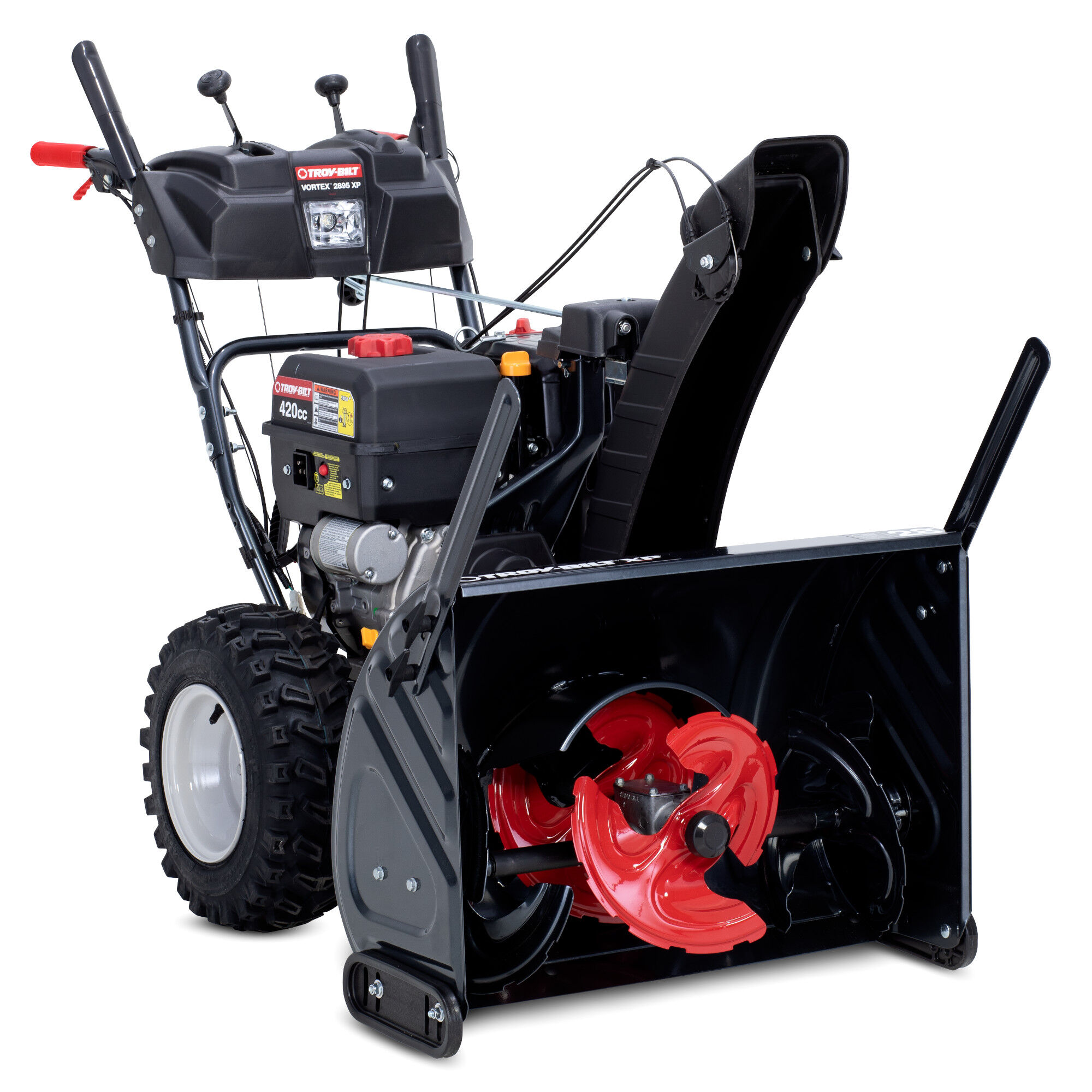
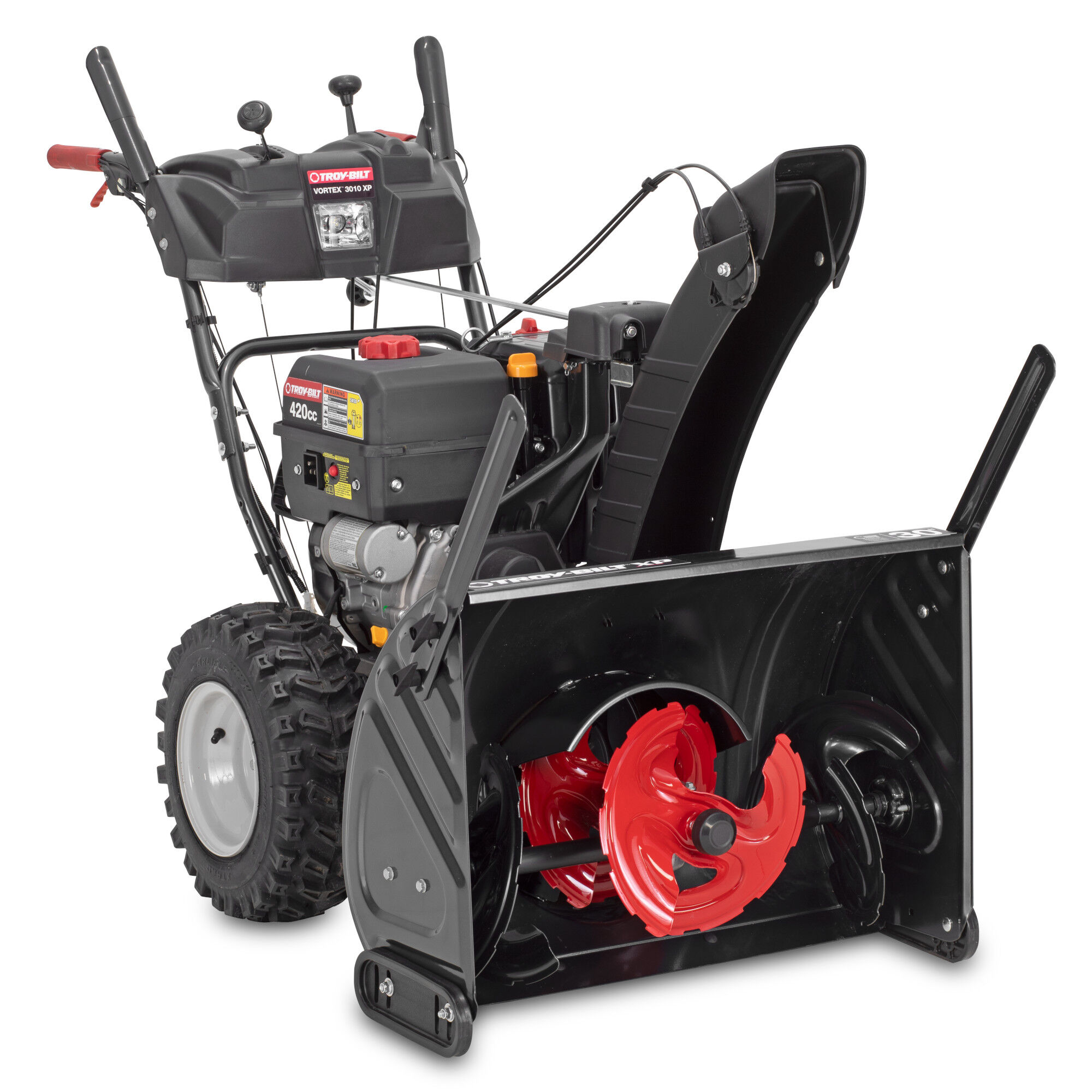
A three-stage model goes one step further. On the Troy-Bilt Vortex 2895 XP, a centre-mounted steel accelerator spins about 10 times faster than the augers and feeds the impeller, which helps with drifts and icy snow. It also has a 420cc engine, a 28-inch clearing width, heated grips, Touch N' Turn power steering and drift cutters that adjust without tools. For wider driveways, the Troy-Bilt Vortex 3010 XP uses the same three-stage design with a 30-inch clearing width.
A three-stage machine is not mandatory, though. A well-sized two-stage model handles most Prairie driveways. The three-stage design makes the most sense if your driveway faces open land, drifts in after every storm or gets a heavy plow ridge.
What Do Drift Cutters Do?
Drift cutters are vertical blades or bars mounted on each side of the auger housing. When a drift is taller than the housing, they slice into its sides so the top collapses into the intake instead of spilling over or around the machine. They are most useful on exposed driveways where the wind builds drifts higher than the snowfall itself.
How Do You Make Sure a Snow Blower Starts in Extreme Cold?
Choose a model with push-button electric start and a recoil backup, then help it along: fresh fuel, the oil grade your owner's manual recommends for cold weather, and storage out of the wind. Deep cold makes any engine harder to start, and electric start saves you from pulling a stiff cord at dawn.
Electric start does not work the same way on every machine, so check the owner's manual before your first storm:
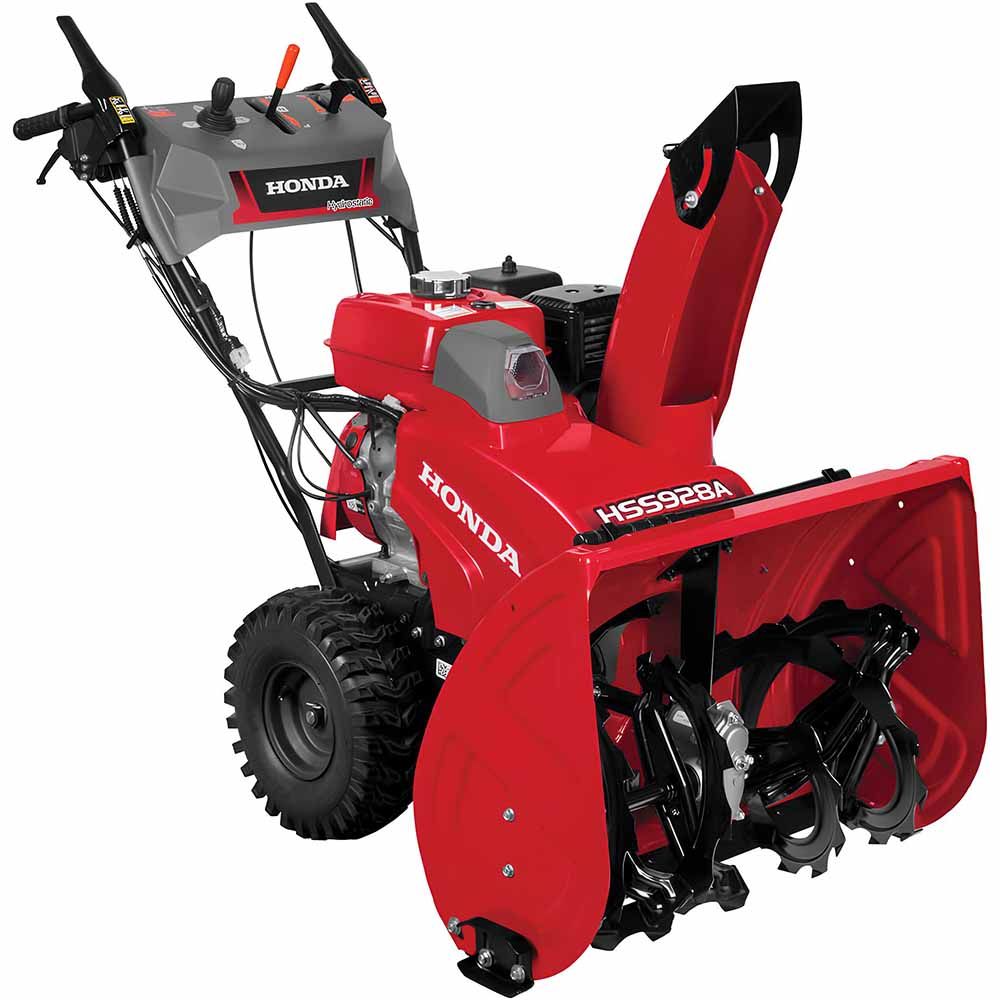
- On the Honda HSS928AAWD and the HSS724AATD, electric start is a DC system, with a recoil starter as a backup.
- On the Troy-Bilt Vortex models, push-button electric start is paired with a recoil start.
- Some gas snow blowers use an electric starter that plugs into an outdoor outlet. If yours does, keep an outdoor-rated extension cord near the door.
One safety rule matters even more in the cold: never start or warm up a gas snow blower inside a garage or shed, even with the door open. Health Canada is clear that gas-powered equipment, including snowblowers, should never be run or turned on in a garage or shed, because of carbon monoxide. Push the machine outside first, then start it. Source: Health Canada, Carbon monoxide: Preventing exposure.
Are Heated Grips and LED Lights Worth It on the Prairies?
Yes, if you often clear snow early in the morning or after work. Prairie winter days are short and the cold is sharp, so heated grips keep your hands working longer and LED lights let you see drifts and obstacles in the dark. They don't replace warm mitts, but they make long sessions far more bearable.
Several models in our catalogue include both features:
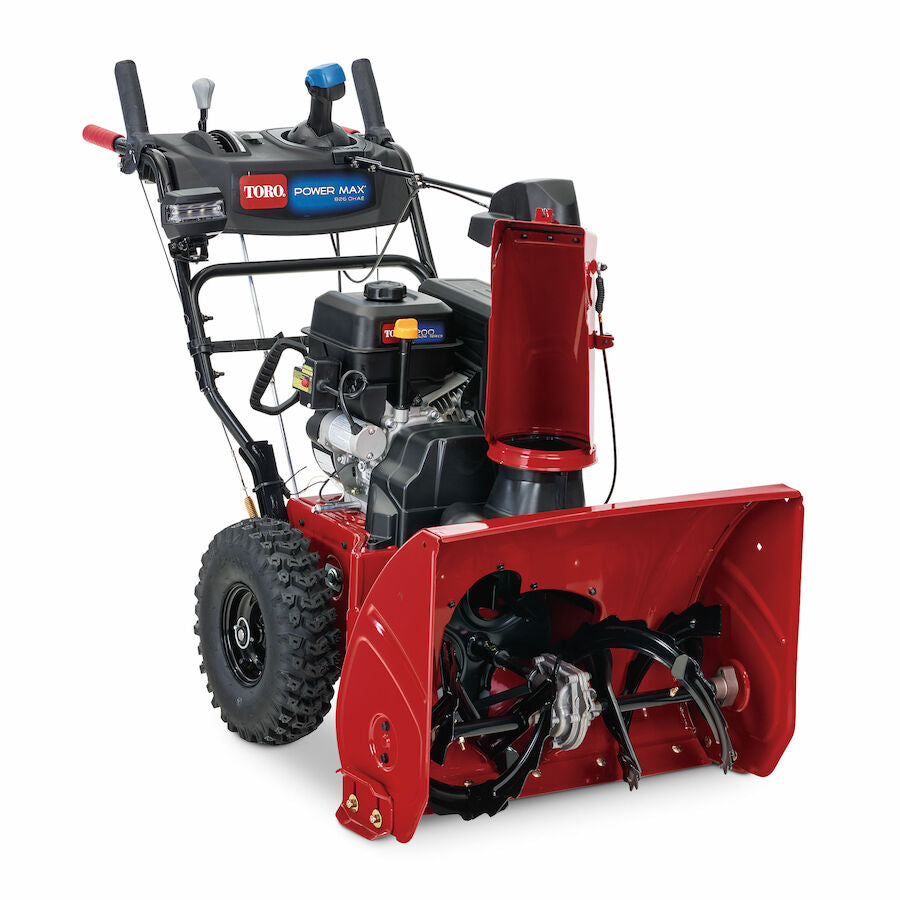
- Toro Power Max 826 OHAE: 26-inch two-stage with a 252cc engine, electric start, hand warmers and LED headlights, throwing snow up to 45 ft. At 194 lbs, it is a manageable size for a two-car city driveway in Calgary, Edmonton, Regina, Saskatoon or Winnipeg.
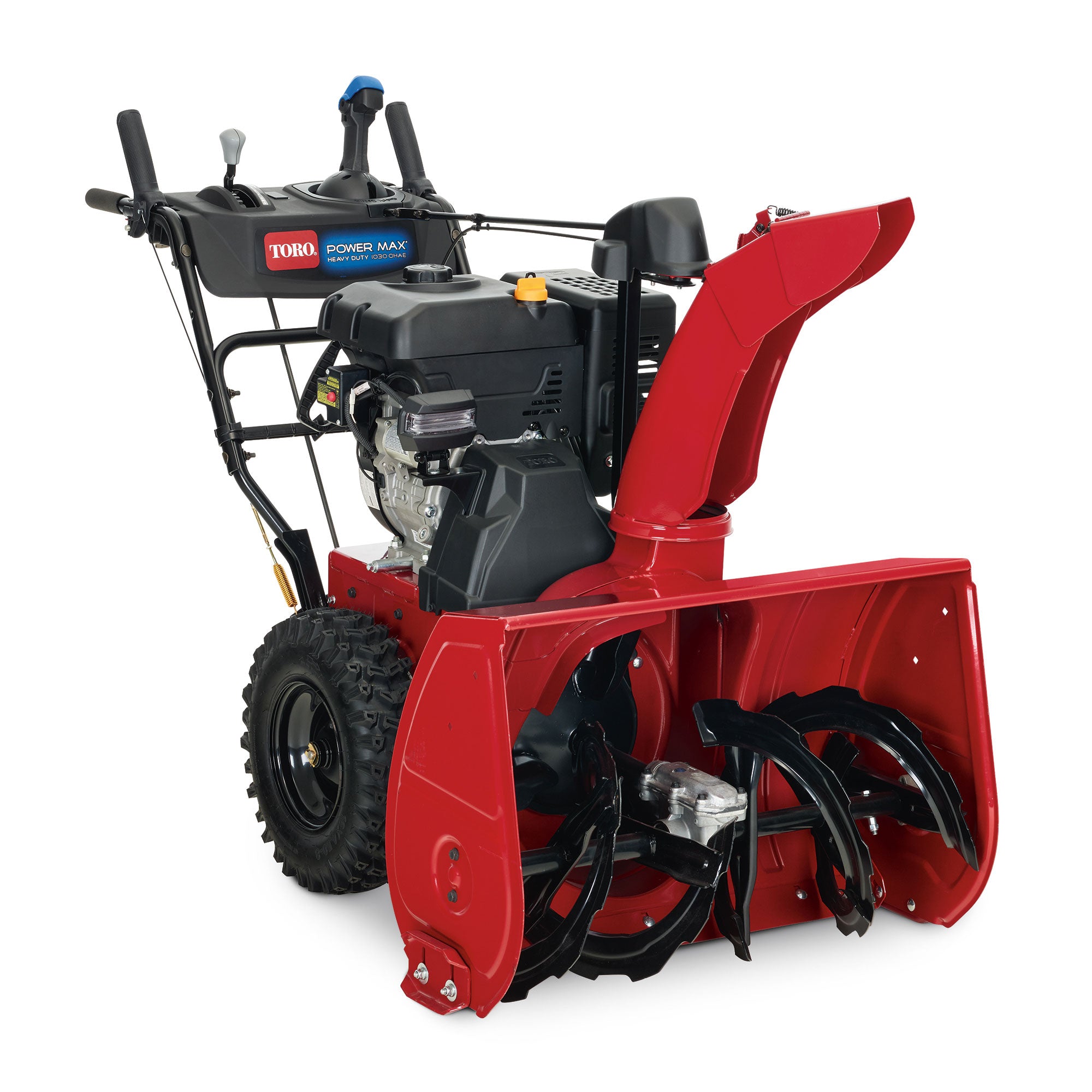
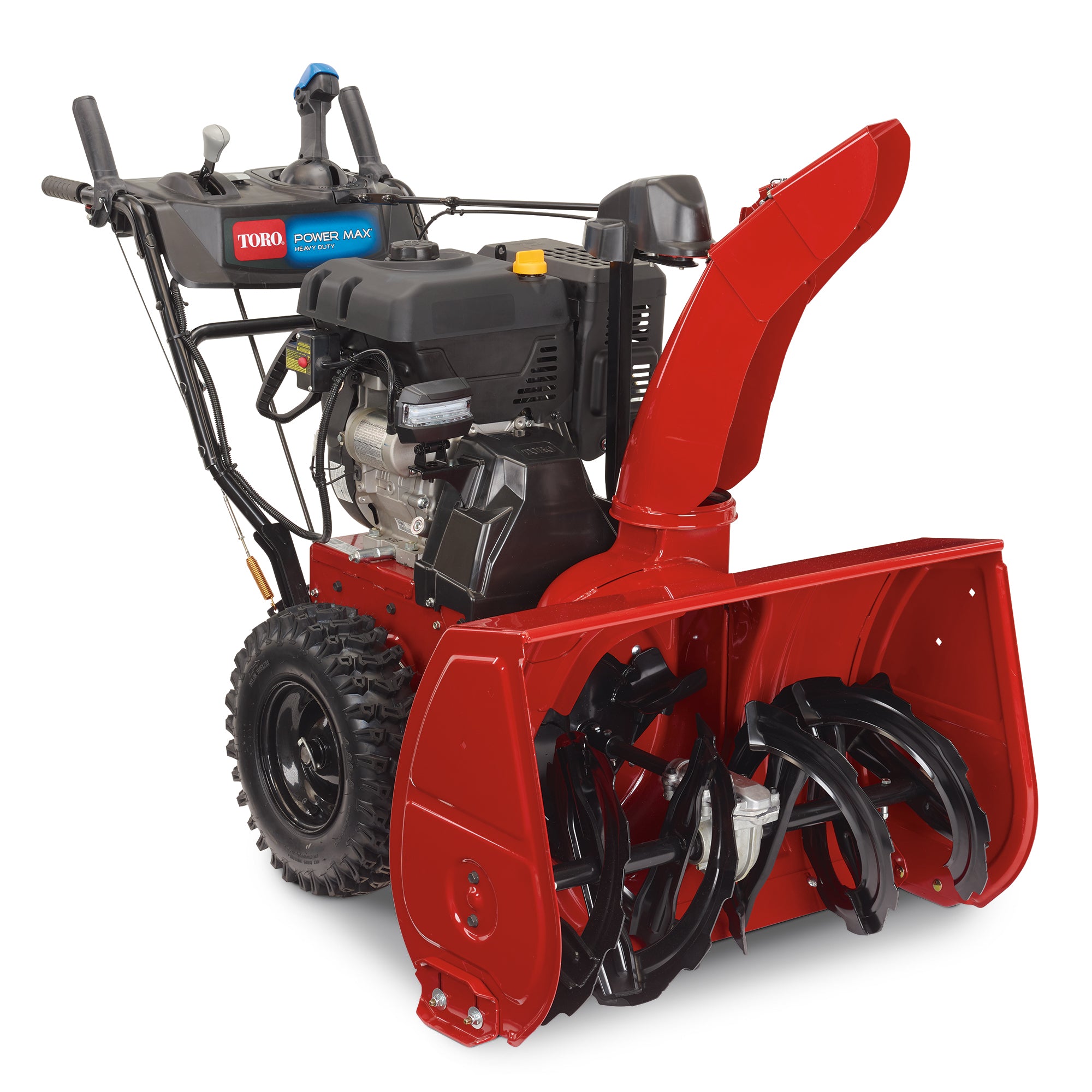
- Toro Power Max HD 1030 OHAE: 30-inch heavy-duty two-stage with a 302cc engine, hand warmers and an LED light, throwing snow up to 49 ft for long or wide driveways.
- Troy-Bilt Vortex 2895 XP and 3010 XP: heated hand grips and an in-dash LED headlight.
- EGO Power+ 28-inch two-stage: a cordless option with heated handle grips and four LED lights (more on batteries and cold below).
Even with heated grips, dress for the conditions: cover exposed skin, wear a warm hat and take breaks indoors during long sessions. The cold is a real risk, not just a discomfort. Environment Canada notes that in an average year, more Canadians die from exposure to winter cold than from lightning, wind storms and tornadoes combined.
Which Snow Blower Can Handle the Plow Ridge at the End of the Driveway?
Choose a two-stage or three-stage machine with a tall intake, a serrated or heavy-duty auger and several forward speeds. The plow ridge is dense, chunky and often partly frozen, so it needs power and patience: take it in narrow bites at low speed rather than ramming the full width of the housing into it.
Models built for this job in our catalogue:
- Toro Power Max HD 1030 OHAE: 21-inch intake height, 302cc engine, six forward and two reverse speeds.
- Honda HSS928AAWD: 270cc Honda GX270 engine, serrated ice-breaking auger and a 28-inch clearing width. Its hydrostatic drive lets you slow down smoothly in the heaviest snow without changing gears.
- Troy-Bilt Vortex 2895 XP: the three-stage accelerator helps feed heavy, chunky snow to the impeller.
Tip: clear the ridge as soon as you can after the plow passes. Once it hardens in the cold, it becomes much harder for any machine, and you may need a shovel to break the top crust first.
What Is the Best Snow Blower for an Acreage or Farmyard?
For long rural driveways and yards, choose a wide, high-capacity two-stage machine with a long throw. A 28- to 32-inch clearing width cuts the number of passes, and throwing snow far past the edge, downwind, keeps the wind from blowing it straight back. Power steering makes a heavy machine much easier to turn.
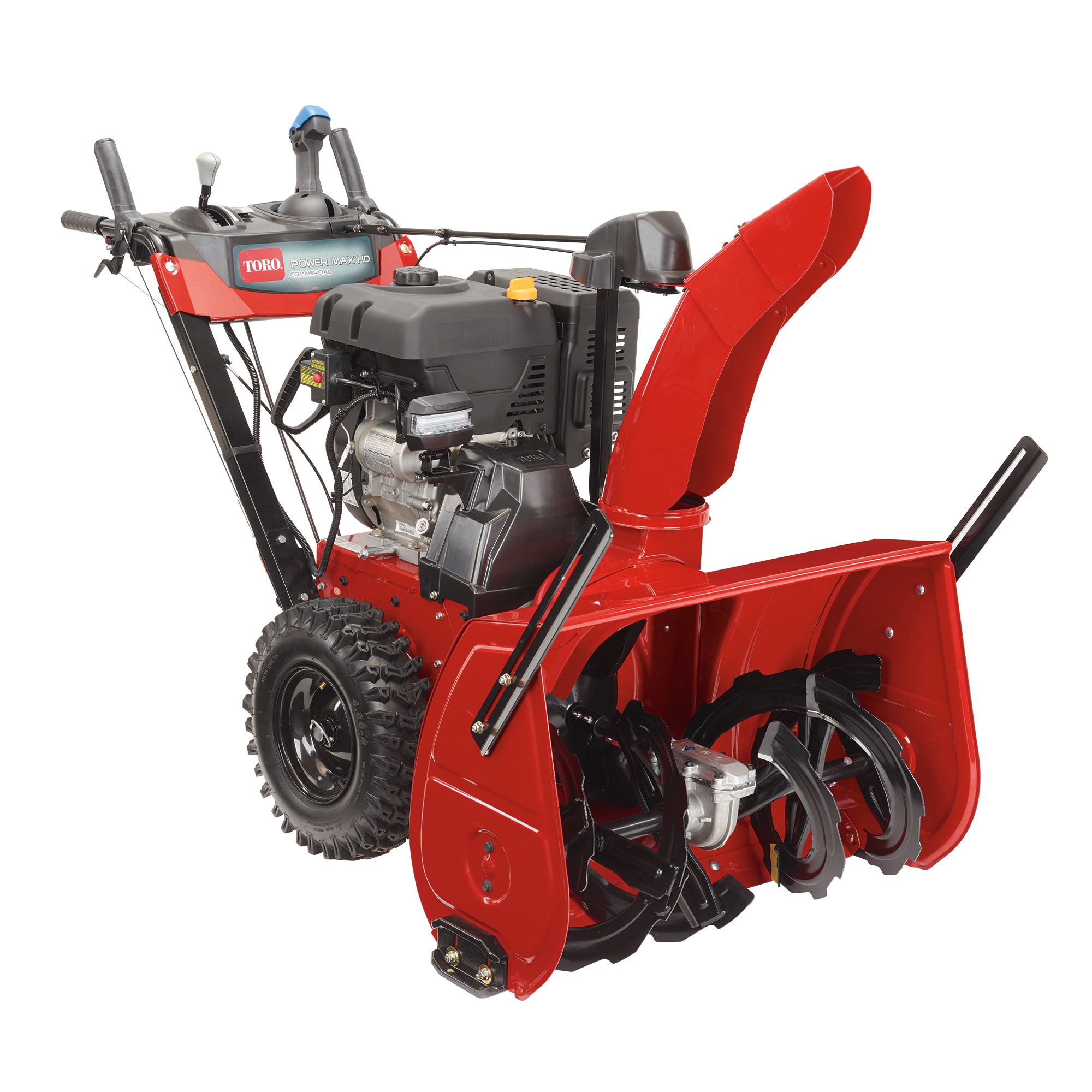
- Toro Power Max HD 1428 OHXE: commercial-grade, with a 420cc engine and a 28-inch clearing width. It throws snow up to 65 ft and moves up to 2,000 lbs of snow per minute, with power steering, hand warmers, LED headlights and an Anti-Clogging System.
- Toro Power Max HD 1232 OHXE: a 32-inch clearing width and a 375cc engine, with a throw of up to 57 ft and up to 2,400 lbs per minute, also with power steering, hand warmers and LED headlights.
- Troy-Bilt Vortex 3010 XP: a 30-inch three-stage machine with power steering and heated grips.
Be realistic about very long lanes. On a rural lane of several hundred metres, a walk-behind snow blower will take a long time after every storm. In that case, a tractor-mounted blower or a local snow-clearing service may be the better option for the lane itself, while a walk-behind machine handles the yard, the paths and the area around the house and buildings.
How Do You Deal With Ice After a Chinook or a Flash Freeze?
Clear the snow before it refreezes. A snow blower moves snow, not glare ice, so the goal is to get the slush and wet snow off the driveway while it is still loose. If ice does form, a track-drive machine keeps better traction, and sand or ice melt handles the thin layer the auger cannot remove.
Chinooks are warm, very dry winds that blow down the eastern slopes of the Rockies. An Environment Canada meteorologist told CBC News that temperature swings of 20 to 30 degrees are not uncommon during a chinook, and that Calgary sees about 25 chinook days per winter. When the cold comes back, puddles and slush can freeze hard in a few hours.
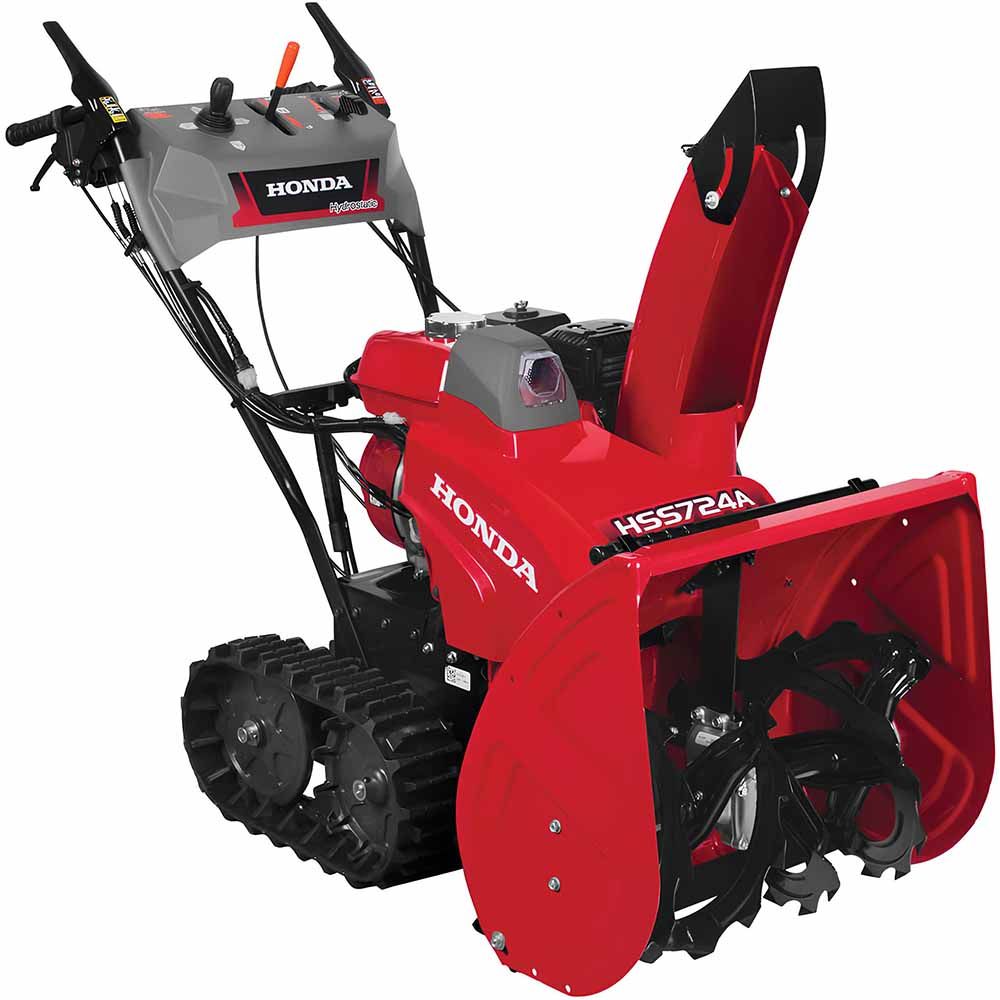
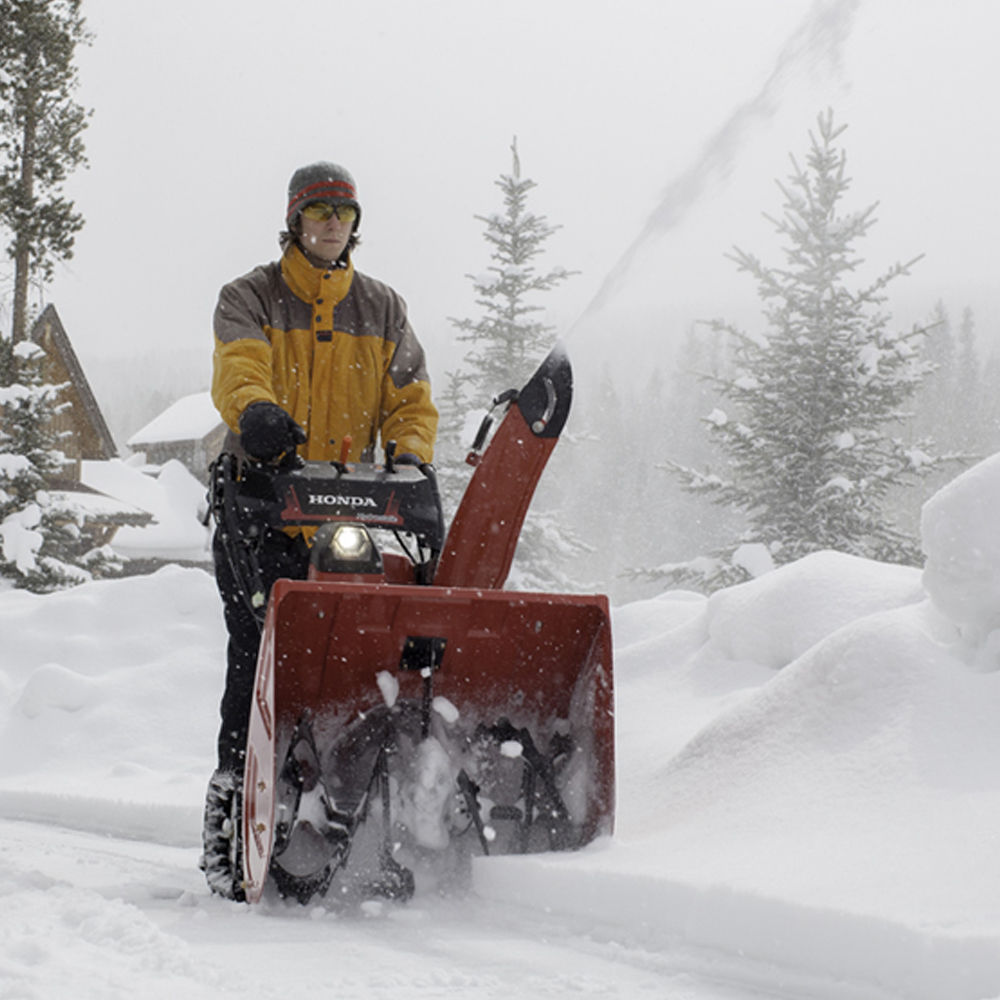
On icy or sloped driveways, traction matters as much as power. The Honda HSS724AATD runs on dual rubber tracks rated for low temperatures, which grip ice and packed snow better than wheels, and its serrated auger breaks up crusted snow before the impeller throws it. It also has a 196cc Honda GX200 engine, a 24-inch clearing width, an LED work light and electric DC start with recoil backup.
A few habits help after a thaw:
- Clear wet snow and slush the same day, before the evening cold sets in.
- Don't force the auger into solid ice: snow blowers are made to move snow, not to chip ice.
- Keep sand or ice melt on hand for the thin glaze a snow blower leaves behind.
Do Battery Snow Blowers Work in Prairie Cold?
Yes, but plan around the cold. Lithium-ion batteries deliver less runtime in deep cold, so store and charge them indoors, bring them out just before you start and keep spare batteries ready for big storms. For long driveways and frequent hard drifts in very cold weather, a gas two-stage machine remains the safer choice.
If you prefer a quieter machine with no fuel or oil changes, the EGO Power+ 28-inch Self-Propelled 2-Stage Snow Blower Kit is one of the widest cordless options in our catalogue: a 28-inch clearing width, a 21-inch intake height, a throw of up to 60 ft, heated handle grips, four LED lights and a 200-degree electronic chute. The kit includes two 12.0Ah 56V batteries and a dual-port charger.
Always follow the temperature limits in your owner's manual for storing, charging and using the batteries. A cordless machine works best for city driveways of average length; for an acreage or a long, exposed driveway, look at the gas models above.
Does RichardF-Garden Ship Snow Blowers to Alberta, Saskatchewan and Manitoba?
Yes. RichardF-Garden ships across Canada, including Alberta, Saskatchewan and Manitoba, from cities like Calgary, Edmonton, Regina, Saskatoon and Winnipeg to smaller towns and rural communities. Order before the first big storm rather than after it: you will have time to set up the machine, check the oil, add fresh fuel and test it on a calm day.
Not sure which size fits your driveway? Our snow blower buying guide explains how to match a machine to your driveway and your snow.
Frequently Asked Questions
What size snow blower do I need for a Prairie driveway?
As a guideline, 24 inches suits a single-car driveway or a short double, 26 to 28 inches suits a standard two-car city driveway, and 30 inches or more suits long, wide or rural driveways. On open, windy lots, size up slightly: you will often clear drifts deeper than the snowfall itself.
Can I store my snow blower outside in a Prairie winter?
It is better to keep it in a shed or garage, out of the wind and drifting snow, so the controls, chute and starter stay free of ice. Never run a gas snow blower indoors, though: push it outside before starting it. If it has to stay outside, use a fitted cover and clear the snow off before each use.
Is a three-stage snow blower worth it in Winnipeg or Calgary?
It depends more on your driveway than on your city. If your driveway is exposed to open fields or wind and fills with hard drifts after most storms, a three-stage model like the Troy-Bilt Vortex is worth considering. For a sheltered city driveway, a good two-stage machine with a tall intake is usually enough.
Should I clear snow during a blizzard or wait?
Wait until the wind drops if you can. During a blizzard, blowing snow refills cleared areas quickly and visibility can be very poor, which makes clearing slow and risky. If you must keep an exit open, clear a single narrow path, work in short sessions, dress for the wind chill and let someone know you are outside.
A Prairie winter rewards preparation. The right snow blower for Prairie winters bites into wind-packed drifts and the plow ridge, starts reliably on the coldest mornings and keeps your hands warm while you work. Choose yours before the snow piles up, and you will spend far less time fighting it. Shop our snow blowers and get your machine ready before the next Prairie storm rolls in.